By DoctorCert Clinical Team
POTS Sick Note UK: Leave, Rights and Adjustments
UK clinical and workplace guide to obtaining a POTS sick note, managing postural orthostatic tachycardia syndrome at work, Equality Act disability rights, and SSP.
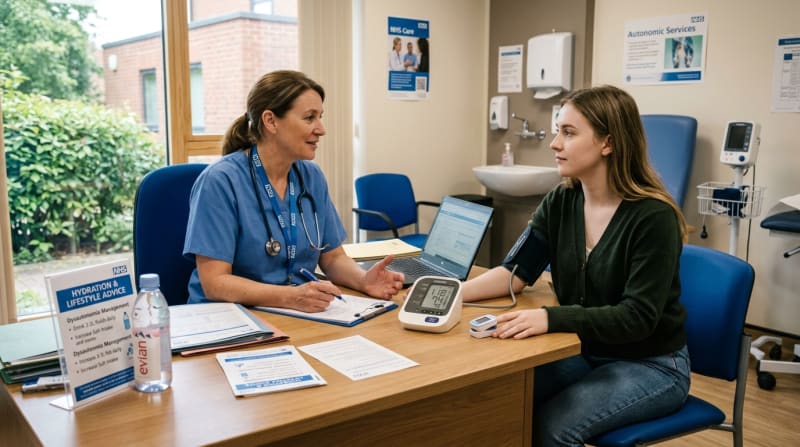
POTS sick note UK guidance is vital for individuals living with Postural Orthostatic Tachycardia Syndrome whose autonomic symptoms impact employment and workplace performance. Postural Orthostatic Tachycardia Syndrome (POTS) is a complex form of dysautonomia characterised by an abnormal increase in heart rate of 30 beats per minute or more (or 40 bpm in adolescents) upon standing from a lying or seated position, occurring in the absence of orthostatic hypotension. Because POTS impairs autonomic circulatory regulation, affected workers experience severe orthostatic intolerance, presyncope (near-fainting), profound fatigue, and cognitive dysfunction that can make standard workplace environments challenging.
Navigating workplace absence and securing appropriate adjustments requires a thorough understanding of clinical criteria, statutory employee rights, and medical certification. Whether you need temporary time off to stabilise during an acute autonomic flare-up or structured medical evidence to support long-term reasonable adjustments, obtaining an official Statement of Fitness for Work (fit note) is a crucial step in protecting your career and health.
Clinical Understanding of POTS and Autonomic Dysfunction
The autonomic nervous system regulates involuntary bodily functions, including heart rate, blood pressure, digestion, temperature regulation, and vascular tone. In POTS, the body fails to properly constrict peripheral blood vessels in response to gravity when standing, leading to blood pooling in the lower extremities and splanchnic circulation. To compensate and maintain cerebral perfusion, the sympathetic nervous system triggers an excessive surge in heart rate and adrenaline.
Subtypes and Pathophysiological Mechanisms
Clinical experts recognise several underlying subtypes of POTS that frequently overlap:
- Neuropathic POTS: Characterised by sympathetic denervation in the lower limbs, impairing vasoconstriction and exacerbating dependent venous pooling.
- Hyperadrenergic POTS: Involves excessive levels of noradrenaline upon standing, causing marked palpitations, tremors, anxiety-like symptoms, and elevated systolic blood pressure.
- Hypovolemic POTS: Driven by low circulating blood volume and red blood cell count, exacerbating orthostatic tachycardia and exhaustion.
- Secondary POTS: Autonomic dysfunction arising in association with underlying conditions such as Ehlers-Danlos Syndrome (hypermobile EDS), Mast Cell Activation Syndrome (MCAS), autoimmune diseases, or post-viral states including Long Covid.
Primary Symptoms Impacting Daily Function
- Cardiovascular symptoms: Marked sinus tachycardia upon standing, palpitations, chest tightness, tremulousness, and labile blood pressure.
- Orthostatic intolerance: Lightheadedness, visual dimming, presyncope, syncope (fainting), and inability to remain upright or stand motionless for more than a few minutes.
- Cognitive impairment: Brain fog, poor working memory, word-finding difficulty, and slowed information processing caused by reduced cerebral blood flow.
- Systemic and fatigue symptoms: Severe exhaustion not relieved by sleep, exercise intolerance, gastrointestinal dysmotility (nausea, gastroparesis, abdominal pain), temperature dysregulation, and headaches.
Because POTS is an invisible illness that predominantly affects young adults and women of working age, employees often face skepticism from managers who misunderstand why a person who looks outwardly well cannot stand for prolonged periods or work under heat stress.
For workers experiencing overlapping vestibular or balance symptoms, explore our clinical overview on sick notes for vertigo.
Clinical Management and Evidence-Based Interventions
Effective management of POTS combines non-pharmacological lifestyle strategies with targeted pharmacotherapy under specialist guidance:
Non-Pharmacological Interventions
- Fluid and sodium loading: Increasing daily fluid intake to 2.5 to 3.5 litres and dietary sodium intake to 6 to 10 grams (under medical supervision) expands intravascular volume.
- Medical-grade compression garments: Wearing Class 2 (20-30 mmHg) or Class 3 (30-40 mmHg) waist-high compression tights or abdominal binders prevents dependent venous pooling far more effectively than knee-high socks.
- Recumbent physical conditioning: Engaging in horizontal exercise programmes (such as rowing, recumbent stationary cycling, or swimming) strengthens cardiovascular capacity without triggering orthostatic intolerance, gradually transitioning to upright exercise as stamina improves.
- Counter-maneuvers: Practicing isometric muscle contractions (calf raises, leg crossing, buttock clenching) during involuntary standing to pump pooled venous blood back to the heart.
Pharmacological Therapies
When non-pharmacological interventions are insufficient to control disabling symptoms, UK specialists prescribe targeted medications:
- Fludrocortisone: A synthetic mineralocorticoid that promotes renal sodium retention and plasma volume expansion.
- Midodrine: An alpha-1 adrenergic agonist that induces peripheral vasoconstriction, reducing lower extremity blood pooling.
- Beta-blockers (e.g., Bisoprolol, Propranolol): Low-dose beta-blockers blunt excessive sympathetic surges and control upright tachycardia.
- Ivabradine: A selective sinoatrial node If channel inhibitor that lowers heart rate without reducing blood pressure, ideal for hyperadrenergic presentations.
- Pyridostigmine: An acetylcholinesterase inhibitor that enhances parasympathetic ganglionic transmission, improving autonomic balance.
Understanding these treatments helps employers appreciate why an employee may need time to adjust to new medications or attend hospital clinics.
Diagnostic Pathways and Clinical Assessment in the UK
Securing a definitive diagnosis of POTS in the UK involves objective autonomic testing through NHS cardiology or neurology departments:
- Active Stand Test (NASA Lean Test): Measuring heart rate and blood pressure while lying flat for 5 to 10 minutes, followed by continuous monitoring while standing upright against a wall for 10 minutes. A sustained heart rate increase of >=30 bpm confirms orthostatic tachycardia.
- Tilt Table Test (HUTT): The gold standard diagnostic evaluation where the patient is strapped to a motorized table that tilts from horizontal to 60 or 70 degrees while continuous hemodynamic monitoring records heart rate and blood pressure responses.
- Blood and urine biochemistry: Ruling out thyroid dysfunction, pheochromocytoma, electrolyte disturbances, and checking morning supine and standing serum noradrenaline levels.
- Echocardiogram and Holter monitor: Ruling out structural heart disease, Wolff-Parkinson-White syndrome, or primary cardiac arrhythmias.
Sickness Absence Rules and Medical Fit Notes
Managing absence due to POTS requires adherence to UK statutory sickness guidelines.
Initial 7 Days: Self-Certification
For short absences lasting up to 7 consecutive calendar days, UK employees do not need to provide a medical certificate from a doctor. You can self-certify using your company's standard sickness reporting protocol or statutory form SC2 self-certification sick note. Employers are legally prohibited from demanding a GP fit note for the first week of sickness.
Sickness Beyond 7 Days: Registered Medical Fit Notes
If an autonomic flare-up or medication adjustment prevents you from working past 7 consecutive days, you must supply an official Statement of Fitness for Work. Under UK law, fit notes can be issued by general practitioners, hospital specialists, and GMC-registered private doctors.
A doctor evaluating a patient with POTS can certify two primary statuses:
- Not fit for work: Indicating that severe orthostatic intolerance, syncopal episodes, or profound fatigue currently make it unsafe or clinically impossible for you to carry out work tasks.
- May be fit for work taking account of advice: Stating that you can perform your duties or modified tasks provided your employer implements specific adjustments (such as seated working, hydration access, or flexible start times).
Equality Act 2010 Protection and Disability Rights
POTS is frequently recognised as a qualifying disability under the Equality Act 2010. To qualify for statutory protection, a condition must satisfy four criteria:
- It is a physical or mental impairment.
- It has an adverse effect on your ability to carry out normal day-to-day activities (such as standing, walking, concentrating, or commuting).
- The adverse effect is substantial (more than minor or trivial).
- The effect is long-term (has lasted, or is likely to last, for at least 12 months, or is likely to recur).
When an employee meets this legal threshold, employers have a mandatory legal duty under Section 20 of the Equality Act 2010 to implement reasonable adjustments to eliminate workplace disadvantages.
Essential Workplace Adjustments for POTS
Tailored workplace adaptations can dramatically improve an employee's ability to sustain productive employment:
- Seated working arrangements: Eliminating requirements for prolonged static standing by providing high-mobility ergonomic chairs or perching stools.
- Unrestricted hydration and salt intake: Permitting frequent access to fluids, electrolyte drinks, and high-sodium snacks at the workstation to support blood volume.
- Temperature control: Positioning desks away from direct heat sources or radiators, providing desk fans, and allowing breathable clothing modifications to prevent heat-induced vasodilation.
- Flexible working hours and hybrid options: Allowing later start times to accommodate morning orthostatic symptoms or remote working to eliminate strenuous public transport commutes.
- Designated quiet rest spaces: Providing a private, reclining rest area where an employee can elevate their legs during presyncopal episodes.
- Support for medical appointments: Granting paid or unpaid time off to attend cardiology, autonomic, or physiotherapy consultations.
Statutory Sick Pay and Income Security
Maintaining your financial wellbeing during periods of illness is crucial for stress management and autonomic stability.
Statutory Sick Pay (SSP)
Eligible employees may receive SSP under the current rules:
- Weekly amount: the ordinary 2026/27 rate is the lower of £123.25 or 80% of average weekly earnings. Some continuing cases have transitional protection.
- Payment starts on the first full qualifying day for eligible employees from 6 April 2026. There is no lower earnings limit or three-day waiting period.
- SSP can last up to 28 weeks, including linked absences separated by eight weeks or less. Check SSP1 requirements if entitlement ends or is refused; benefits have separate eligibility rules.
Occupational Sick Schemes
Many organisations provide enhanced contractual sick pay schemes. Review your employment handbook to determine your contractual entitlements. Maintaining an unbroken chain of valid medical certificates is essential to ensure seamless payroll processing.
Phased Returns and Resuming Duties Safely
Returning to the workplace after an extended autonomic flare-up should always be gradual. Pushing to resume 100% full-time hours immediately often precipitates a secondary crash.
Designing a Phased Return Protocol
A collaborative phased return plan typically spans 4 to 8 weeks:
- Initial phase: 2 to 3 days per week with short shifts (3 to 4 hours per shift), performing solely seated, low-stress tasks.
- Intermediate phase: Incremental increases in shift duration with scheduled recumbent rest breaks.
- Final phase: Transition to agreed sustainable hours, maintaining permanent reasonable adjustments.
For comprehensive guidance on setting up, agreeing, and formalising these schedules with HR, read our guide to phased return to work agreements.
If your role involves driving, operating heavy machinery, or patient care, your employer may require formal medical verification that your symptoms are stable before you resume safety-critical tasks. In these situations, a registered doctor can issue an official fit to work certificate documenting your clinical clearance and workplace boundaries.
How to Get a Verified POTS Sick Note
Securing timely medical evidence should not add unnecessary strain to your recovery.
NHS Specialist and GP Pathways
You can request a fit note through your NHS GP or autonomic specialist. However, primary care appointments can be difficult to book on short notice, especially when urgent medical evidence is required for payroll deadlines or formal sickness review meetings.
GMC-Registered Online Medical Consultations
When you need rapid, fully compliant medical evidence, you can consult a licensed private GP online. Through our online sick note platform, you provide your clinical background, specialist letters, symptom history, and workplace details.
A UK-registered doctor reviews your medical history and issues a digitally signed Statement of Fitness for Work that is fully verifiable by employers, universities, and government bodies.
For documentation specifically tailored to employment contexts and HR requirements, our work sick note service ensures all relevant statutory details, duration recommendations, and adjustment notes are included.
Practical Management Checklist for Workers with POTS
Follow these practical steps to protect your health and career:
- 1. Maintain clinical documentation: Keep copies of your tilt table test results, cardiology clinic letters, and medication regimens in an accessible folder.
- 2. Follow formal absence reporting: Notify your employer according to company policy as soon as a flare-up prevents you from working.
- 3. Use self-certification for week one: Complete form SC2 for the first 7 calendar days of absence.
- 4. Obtain medical certification from day 8: Request a fit note from your GP or an online GMC-registered service detailing functional limitations.
- 5. Request an Occupational Health assessment: Engage with occupational health to formalise seated working, hydration breaks, and thermal accommodations.
- 6. Utilize Access to Work funding: Apply for government Access to Work grants for specialized ergonomic seating, transport support, or temperature aids.
If you need a verified, GMC-registered medical certificate to support your absence or workplace adjustments, book your online consultation today and receive your official documentation without delay.
Frequently Asked Questions
Can I get a sick note for POTS in the UK?
Yes. Registered medical practitioners, including NHS GPs, cardiologists, and GMC-registered private doctors, can issue an official Statement of Fitness for Work (fit note) for Postural Orthostatic Tachycardia Syndrome. The certificate can sign you off completely or recommend workplace adjustments.
Is POTS legally recognised as a disability in the UK?
POTS can be recognised as a disability under the Equality Act 2010 if its symptoms (such as orthostatic intolerance, fatigue, and brain fog) have a substantial and long-term adverse effect on your ability to carry out normal day-to-day activities. This gives employees the legal right to reasonable adjustments.
What reasonable adjustments are commonly recommended for POTS?
Common adjustments include seated workstations or perching stools, permission to have fluids and salt snacks at all times, temperature control (fans, avoiding hot environments), flexible or hybrid working hours, and access to a private area to lie down with legs elevated during presyncopal episodes.
Can my employer dismiss me for having POTS?
Under UK employment law, dismissing an employee because of a disability or disability-related absence without following fair capability procedures and exploring all reasonable adjustments can constitute unlawful disability discrimination and unfair dismissal. Employers must consult occupational health and seek alternatives before considering termination.
Can I drive to work if I have POTS?
The DVLA requires drivers to notify them of medical conditions that could affect safe driving, including conditions that cause sudden dizziness, blackouts, or syncope. If your POTS causes unpredictable fainting or presyncope while seated, you must refrain from driving and consult your doctor regarding DVLA medical notification rules.
How quickly can I obtain an online sick note for a POTS flare-up?
Through a reputable online medical service, you can complete a secure medical assessment and receive a verifiable, doctor-signed fit note on the same day, avoiding long GP waiting times and ensuring your employer receives prompt documentation.
Sources and guidance
Guidance checked on 9 October 2026. GOV.UK SSP amounts; GOV.UK sickness evidence.