By DoctorCert Clinical Team
Broken Bone Sick Note: Off Work Duration & Recovery Guide
A comprehensive clinical and statutory guide to obtaining a sick note for a broken bone or fracture in the UK. Understand bone healing stages, recovery timelines, plaster cast adjustments, and Statutory Sick Pay (SSP).
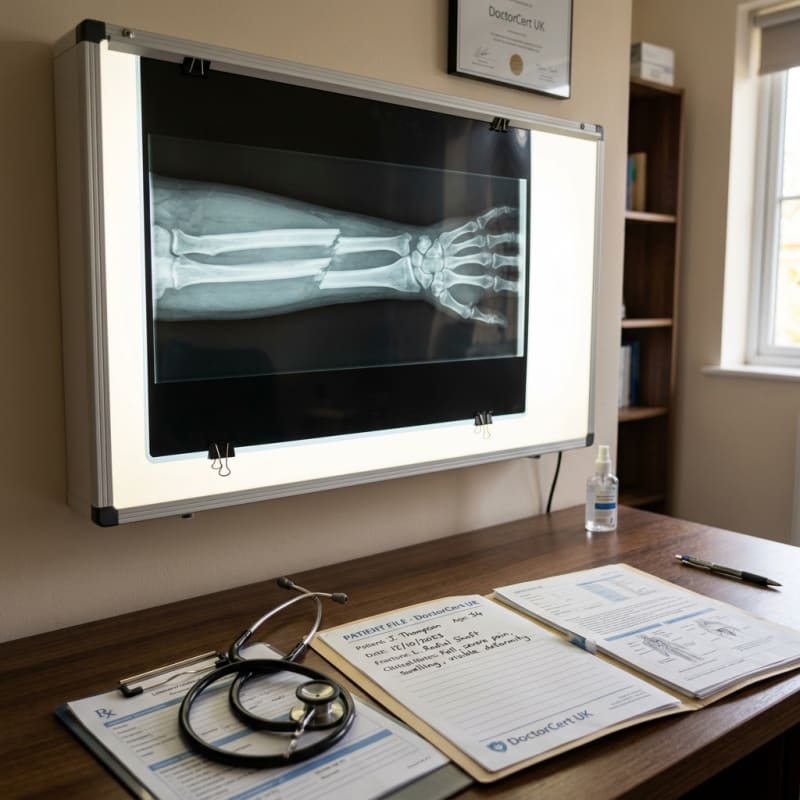
A broken bone, referred to clinically as a bone fracture, is a significant medical injury that occurs when the physical force applied to a bone exceeds its structural strength, causing a break or crack. Fractures can range from clean, closed breaks that require simple immobilization in a plaster cast to complex, open fractures that require surgical stabilization with plates, screws, or pins. Recovering from a broken bone is a multi-month process that can severely impact an employee's ability to perform their job duties, especially if the injury affects their dominant hand, arm, leg, or weight-bearing capacity. For workers in the United Kingdom, navigating sickness absence, obtaining appropriate medical evidence, and understanding statutory rights is critical to securing their job and income. If you need professional medical evidence to support your absence or obtain a fit note, you can access our private medical certificate service or submit an online consultation request directly through our secure platform.
This detailed guide serves as a comprehensive clinical and statutory manual for employees, employers, and clinicians managing workplace absences related to bone fractures. It covers the biology of bone healing, the impact of plaster casts and splints on work capacity, self-certification and fit note regulations, workplace modifications, and financial entitlements under the Statutory Sick Pay (SSP) framework.
Understanding Bone Fractures and the Healing Process
To understand the recovery timeline for a broken bone, one must examine the physiological stages of bone healing. When a fracture occurs, the body immediately begins a complex repair process. The first stage, occurring within hours, is the inflammatory phase, where a blood clot (hematoma) forms around the break, delivering immune cells to clear damaged tissue and releasing growth factors. Within a few days, the repair phase begins, during which the body forms a soft callus of cartilage and collagen, bridging the gap between the bone fragments. Over the next several weeks, this soft callus is gradually mineralized and replaced by hard, woven bone (hard callus), which is visible on X-rays.
The final stage is the remodeling phase, which can continue for months or even years. During this phase, the body reshapes the newly formed bone, replacing the temporary woven bone with strong, lamellar bone, restoring the bone's original strength and structure. The speed of this healing process depends on several factors, including the specific bone broken, the patient's age, nutritional status, overall health, and whether the fracture was stable or required surgical intervention. For example, a minor wrist fracture may heal sufficiently for light duties in six weeks, while a major femur or tibia fracture can require three to six months of recovery.
Clinical management of fractures focuses on alignment and immobilization. Stable fractures are typically treated conservatively with a plaster cast, fiberglass cast, or removable splint to keep the bone fragments in place. Displaced, unstable, or open fractures require surgical intervention, known as open reduction and internal fixation (ORIF). ORIF involves surgically exposing the bone and using metal plates, rods, screws, or pins to secure the fragments. While surgery provides strong internal stabilization, it also introduces surgical wounds and the risk of infection, requiring careful post-operative care and a longer initial period of complete rest.
Why a Broken Bone Demands Complete Sickness Absence
Sickness absence during the initial stages of a broken bone is clinically necessary to ensure proper alignment and healing. Movement or weight-bearing on a newly fractured bone can disrupt the forming callus, leading to non-union (where the bone fails to heal) or mal-union (where the bone heals in an incorrect position), which can cause long-term pain and disability. For weight-bearing fractures, such as a broken leg, ankle, or foot, complete absence is essential to avoid putting pressure on the limb.
Additionally, the presence of a plaster cast, splint, or surgical boot severely restricts mobility and physical capability. In manual roles, including construction, warehousing, and agriculture, working with a cast is impossible and unsafe, as it prevents the lifting, carrying, and handling tasks required for the job. Even in office or administrative roles, a broken dominant arm or wrist makes typing, writing, and handling files slow and painful, causing significant strain. Furthermore, commuting to work presents major safety hazards: driving is legally prohibited if a cast or injury impairs your ability to control the vehicle, and using public transport increases the risk of falls or accidental impacts to the healing limb. The side effects of strong pain relief medications, such as codeine or tramadol, can also cause drowsiness and reduce cognitive function, making it unsafe to perform work duties.
If you are off work with a fracture and need a medical certificate to support your absence, our online clinical service is available. By completing a digital health assessment, our GMC-registered doctors can review your case and issue a valid private fit note. To learn more about how this aligns with UK rules, you can review our guide on whether an employer can refuse a sick note or begin a consultation.
Sickness Absence Rules in the UK: Self-Certification and Fit Notes
When you are unable to work due to a broken bone, you must follow statutory UK absence procedures to protect your employment status and secure your sick pay. For the first seven calendar days of your sickness, you do not need to provide a medical certificate from a doctor. You are legally permitted to self-certify your illness. You can do this by informing your employer in writing of your inability to work or by completing a self-certification form (such as the HMRC SC2 form) when you return to work. Employers cannot insist on a doctor's note for this initial seven-day period.
The seven-day self-certification rule includes all calendar days in a row, not just working days. Because a broken bone is a sudden and significant injury, you will likely need to cover a longer recovery period beyond the first week. To do this, you must obtain a Statement of Fitness for Work, commonly known as a fit note, from a registered healthcare professional.
A gap in your sickness documentation can result in your employer withholding contractual or statutory sick pay. Because fractures often require immediate treatment in a hospital emergency department, you may have received an initial discharge summary or medical note from the hospital. If you need a subsequent fit note to cover your ongoing recovery, our online service can help. Our GMC-registered doctors can conduct a remote clinical assessment and issue a valid private fit note based on your hospital documentation, ensuring continuous coverage. Learn more about the remote process in our guide on how to get a sick note online.
Obtaining a Fit Note for a Broken Bone
A fit note for a broken bone can be issued by a registered medical practitioner, such as a doctor, nurse, or physiotherapist. During your clinical evaluation, the practitioner will ask about the mechanism of your injury, the specific bone fractured, the type of immobilization used (such as a plaster cast, boot, or splint), any surgical procedures performed, and the physical requirements of your job.
To support your fit note request, you should provide clinical evidence of your fracture. This can include hospital discharge summaries, copy of X-ray reports, clinic letters from orthopedic specialists, or copies of your prescriptions. If you choose to use our online platform, you can securely upload these documents as part of your consultation. Our GMC-registered doctors will review this evidence to verify your injury and determine the appropriate duration for your fit note.
The duration of a fit note for a broken bone depends on the location and severity of the fracture. A minor fracture in a non-dominant limb may require a sign-off of four to six weeks. A major weight-bearing fracture (such as a broken leg) or a fracture requiring surgery typically requires an initial sign-off of six to twelve weeks, with extensions issued as follow-up X-rays confirm healing progress.
Workplace Adjustments and Phased Return to Work
As your bone heals and your cast is removed, you may transition from being completely unfit for work to being able to perform light duties. The issuing clinician can use the "may be fit for work" option on your fit note to recommend temporary workplace adjustments. These modifications help you return to your role safely without risking re-injury.
For individuals recovering from a broken bone, common workplace adjustments include:A phased return to work, starting with reduced hours and gradually increasing to your normal schedule. You can read more about this in our phased return guide.Physical restrictions, specifically avoiding lifting, carrying, or manual handling, especially if the injury affected your arm or wrist.Ergonomic adjustments, such as voice-to-text software if you cannot type, or specialized chairs and footrests to keep a lower limb elevated.Mobility accommodations, including desk-based duties or remote work if a cast or boot prevents you from commuting or moving around the workplace safely.Restricted driving, ensuring you do not drive for work purposes until medically cleared and your cast has been removed.
Employers are legally required to consider these recommendations under UK health and safety regulations and, where applicable, the Equality Act. If your employer is unable to accommodate the recommended adjustments, the fit note defaults to "not fit for work," and you should remain off sick. You can find more detail on your rights on our pricing and services page.
Sick Pay Entitlements: SSP and Company Policies
You may qualify for SSP if sickness prevents you working and you meet the remaining eligibility rules, including employment status, having started work and notification. Since 6 April 2026 there is no lower earnings limit or four-consecutive-day requirement. Check the current rules with payroll.
Since 6 April 2026, eligible employees can receive SSP from their first full qualifying day; there are no three unpaid waiting days. Qualifying days are normally days you would work. SSP is paid through payroll with applicable tax and National Insurance deductions. Read about current and historical SSP waiting-day rules.
Many employers offer contractual sick pay schemes, often called company sick pay, which provide higher payments than the statutory minimum. These schemes vary, with some companies offering full pay for several weeks or months. You should check your contract of employment or consult your HR department to understand your company's specific sick pay policy. If you do not qualify for SSP or if your company sick pay runs out, you may be eligible to apply for government benefits, such as Employment and Support Allowance (ESA) or Universal Credit, using your fit notes as medical evidence.
How DoctorCert Can Help
At DoctorCert UK, we understand that traveling to a GP surgery or waiting for an appointment can be incredibly difficult when you have a broken bone. The physical challenge of traveling with a cast, crutches, or boot can aggravate your injury, and securing a timely appointment with an NHS GP can be stressful.
Our online platform provides a convenient, secure, and professional alternative. By submitting a digital consultation, you can share your symptoms, medical history, and hospital discharge documents with our team of GMC-registered doctors. We review each case to ensure safety and clinical validity. If approved, we will issue a digital medical certificate that meets all UK legal and employer requirements, allowing you to focus on your recovery. Visit our homepage to start your booking or review our range of clinical services.
Frequently Asked Questions
Can you get a sick note for a broken bone?
Yes, you can get a sick note for a broken bone. Because a fracture is a significant physical injury that impairs mobility and functional capacity, it is a recognized medical reason for sickness absence. A doctor or other registered healthcare professional can issue a fit note if your injury prevents you from performing your job duties safely.
How long can you be signed off work with a broken bone?
The duration of a sick note for a broken bone depends on the location of the fracture and your job role. A minor fracture in a non-dominant limb may require a sign-off of four to six weeks. A major weight-bearing fracture or a fracture requiring surgery typically requires an initial sign-off of six to twelve weeks, with extensions issued as healing progresses.
Can you work with a cast on your arm or leg?
Whether you can work with a cast depends on your job duties. In manual roles involving lifting, driving, or physical exertion, working with a cast is unsafe and generally prohibited. In sedentary office roles, you may be able to work if adjustments can be made, such as voice-to-text software or remote work.
Can you drive with a plaster cast in the UK?
No, you should not drive while wearing a plaster cast or splint in the UK. Under DVLA rules, you must be in full control of the vehicle at all times. Driving with a cast can invalidate your motor insurance and lead to prosecution for driving without due care and attention.
Do employers accept private sick notes for fractures?
Yes, UK employers widely accept private medical certificates and fit notes issued by GMC-registered doctors. The certificate serves as valid medical evidence of your inability to work, matching all statutory and professional standards.
Sources and guidance
Guidance checked on 9 October 2026. GOV.UK SSP amounts; GOV.UK sickness evidence.


